BUSINESS ENERGY
Energy performance certificate for business

Read time: 5 minutes

By Les Roberts, Business Energy Expert
8th September, 2025
An Energy Performance Certificate for business rates the energy efficiency of your premises. The certificate uses an A to G grading format to indicate energy efficiency - the most efficient will be graded ‘A’, while the least efficient gets a grade ‘G’.
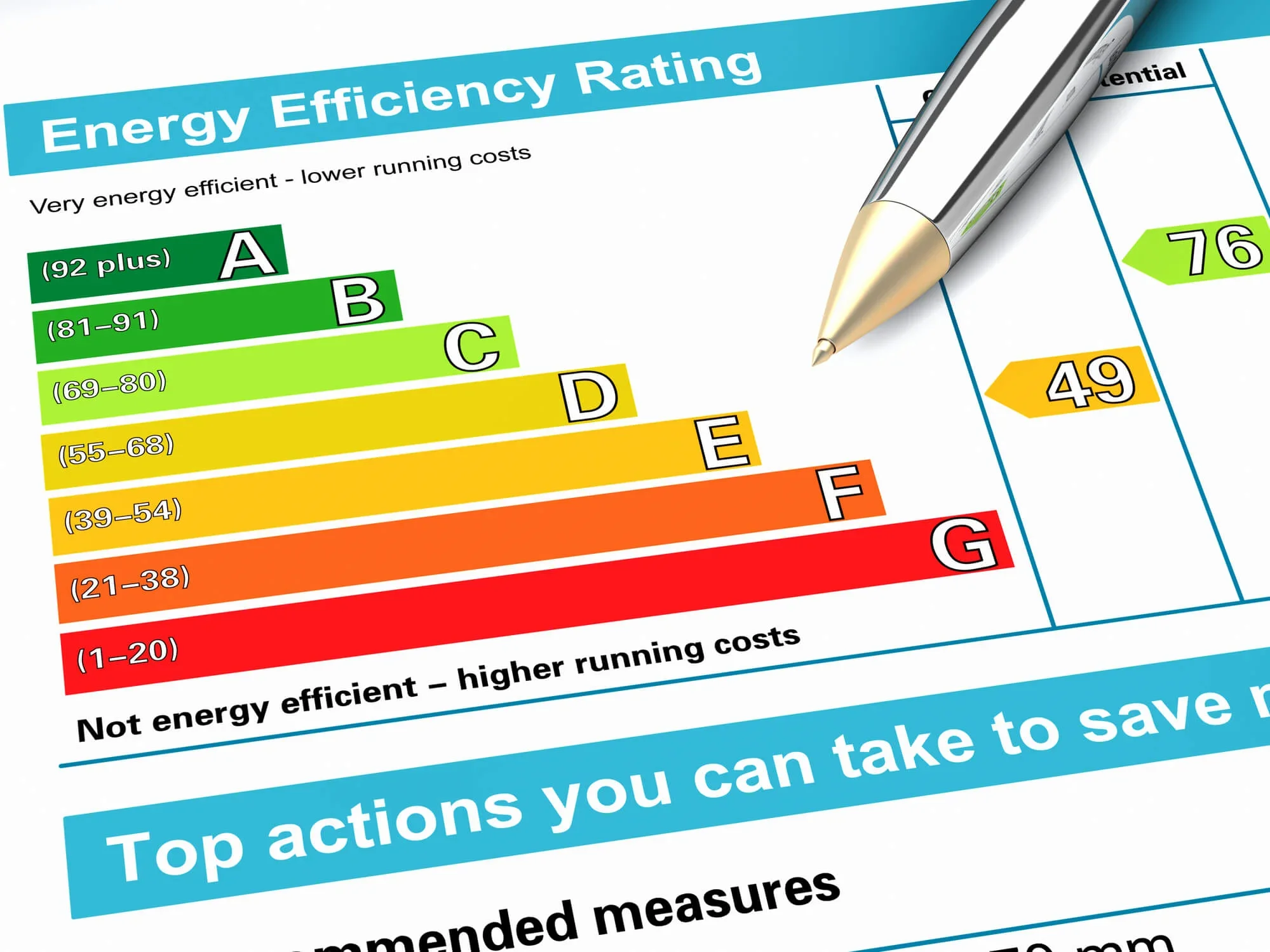
In most cases, having an Energy Performance Certificate (EPC) is a legal requirement. If you own your business premises, it's your responsibility to apply for and pay for an EPC. If you rent, your landlord will most likely be responsible for making sure the building has a valid EPC. But always check your agreement in case it says that you, as the tenant, are responsible.
Unless you are exempt from needing a commercial EPC, you may face a penalty charge if you don’t have one.
Nearly all commercial buildings will need an Energy Performance Certificate (EPC). The government requirements state that you need one when:
- You rent out or sell your premises
- A building under construction is completed
- Changes are made to the parts of the building for separate occupation, involving any changes or additions to heating, air and ventilation systems
In this guide to commercial Energy Performance Certificates…
- You'll learn what a commercial EPC is, how the A to G rating scale works, and why it matters for your business premises.
- You'll find out exactly when your business is legally required to have a valid EPC, and which properties may be exempt.
- You'll understand the difference between simple and complex buildings, and how this affects who can carry out your assessment.
- You'll see the latest Minimum Energy Efficiency Standards (MEES) rules, including the government's confirmed EPC B requirement for larger rented buildings from 2031.
- You'll get a clear, step-by-step process for getting an EPC, improving a low rating, and what to do if you're fined.
What is a commercial EPC, and who needs one?
A commercial Energy Performance Certificate (EPC) is a type of legal document that rates the energy efficiency of a non-domestic building on a scale from A (most efficient) to G (least efficient). It also sets out recommended improvements to reduce energy use and running costs."
A commercial EPC is a legal document that grades the energy efficiency of a business property. It gives the building an energy rating from A (very efficient) to G (very inefficient). It also includes suggestions on how to improve energy performance, reduce usage, and cut costs.
Think of it like an energy label for your business property. It helps you understand how much energy your building uses and what that could mean for running costs.
A commercial EPC is necessary for most non-residential buildings in the UK. You’ll need a commercial EPC if you’re selling, renting, or building a non-domestic property in the UK. These include shops, offices, restaurants, warehouses, industrial sites, and more.
You are required to have an energy performance certificate for commercial property in the following scenarios:
- Selling or renting out your premises
- Completing the construction of a new building
- Altering spaces within a building to create separate units, especially if it involves changes to heating, ventilation, or air-conditioning systems
Certain properties are exempt, including listed buildings, places of worship, and temporary structures.
How to work out whether you have a simple or a complex building
The process for getting a commercial energy performance certificate varies depending on the complexity of the building:
- Simple Buildings: Properties with straightforward energy features, such as small heating systems or natural ventilation. These are typically assessed by Level 3 or Level 4 energy assessors.
- Complex Buildings: Properties with advanced features like HVAC systems. These require assessment by Level 5 energy assessors.
To find an assessor qualified to evaluate your property, visit the Commercial EPC Register online.
How to display a commercial EPC
In certain cases, businesses must display their energy performance certificate prominently. If your premises tick any of the boxes below, you'll need to show your certificate:
- The building’s total floor area exceeds 500 square meters
- The property is frequently accessed by the public
- An EPC has already been issued for the property’s sale, rental, or construction
Failure to display the EPC can result in fines ranging from £500 to £5,000, depending on the building's rateable value.
What does a commercial Energy Performance Certificate include?
A commercial EPC provides a detailed assessment of the property’s energy efficiency, including:
- Energy Rating: An A to G grade that summarises efficiency
- Recommendations: Suggestions to improve energy performance, such as installing insulation or upgrading heating systems
- Estimated Savings: Potential cost and carbon savings if suggested measures are implemented
What are energy ratings for businesses?
An energy rating for business premises is a standardised score shown on the EPC. Properties are rated as a letter from A to G, which indicates how much energy a building is likely to use relative to its size and use.
Energy ratings are a simple way of showing how energy-efficient a commercial building is.
These ratings give landlords, business owners, and potential tenants or buyers a clear idea of how much energy a building uses and how expensive it might be to run. The better the rating, the lower your likely energy bills, and the smaller your carbon footprint.
What do the energy rating bands mean?
| Rating | Description | What it means for your business |
| A | Most efficient | Lower running costs and great for green credentials |
| B–C | Above average efficiency | Solid performance and savings |
| D–E | Average to below average | Still legal to let, but may need improvements |
| F–G | Poor efficiency | High running costs – and illegal to let without upgrades |
Why should you care about your business property's EPC rating?
Even if you're not selling or renting out your premises, your EPC rating matters. Here’s why:
- It affects your business energy bills – more efficient buildings use less energy.
- It’s a legal requirement – buildings must have a minimum EPC rating of E to be let commercially in England and Wales.
- It impacts your green credentials – a better EPC rating shows customers and stakeholders that you're committed to sustainability.
- It may unlock funding – a stronger rating could help you qualify for grants or green finance schemes.
What are the current Minimum Energy Efficiency Standards (MEES) for commercial property?
Since April 1, 2018, landlords have not been able to grant a new lease on a commercial property with an EPC rating below E. This rule has applied to existing leases since April 1, 2023. This remains the current legal minimum for most rented commercial buildings.
On June 18, 2026, the government published an interim response to its consultations on strengthening these standards. It confirmed that, from 2031 and where cost-effective to do so, privately rented non-domestic buildings over 1,000 square metres in England and Wales will need to reach an EPC rating of at least B.
Buildings below the 1,000 square metre threshold are expected to stay subject to the current EPC E minimum, with no set deadline announced yet for raising this further. An earlier proposal to require EPC C across all non-domestic rented buildings by 2027 will not go ahead.
The government estimates that raising the standard to EPC B for larger rented buildings could save tenants of the largest properties in scope approximately £360 million a year in energy costs by 2031, as well as reducing their exposure to volatile wholesale energy prices.
These changes are not yet law. It will only take effect once secondary legislation has passed through Parliament, with further details planned. If you rent a larger commercial property, it could be worth starting to plan improvement works ahead of any confirmed deadline, rather than waiting until legislation is finalised.
What are the penalties for not having a commercial EPC?
You can get hit with a fine if you don't have a valid EPC for your commercial property. The fine ranges from £500 to £5,000 and depends on the building’s rateable value. You'll also need to get an EPC for your business as soon as possible.
Can you appeal a penalty?
If you believe you have been incorrectly fined, you can appeal the penalty notice. Start by following the instructions on the penalty charge document to request a review. If the penalty is upheld, you may escalate the appeal to a county court (or a sheriff court in Scotland).
Are there any exemptions from commercial EPC requirements?
Not all properties need an energy performance certificate. You'll be exempt if your building falls into any of the categories below:
- Detached buildings with a floor area under 50 square meters
- Listed buildings where compliance would alter their character
- Temporary structures that are planned to be used for less than two years
- Places of worship
- Industrial and agricultural buildings with low energy usage
- Buildings slated for demolition with approved planning permission
If your property qualifies for an exemption, ensure you have documentation to support your claim in case of disputes.
A MEES exemption is a type of formal registration that allows a landlord to continue letting a commercial property below the minimum required EPC rating. This is usually because improvements would not be cost-effective (the 'seven-year payback test') or would devalue the property by more than 5%.
What are the benefits of having a commercial Energy Performance Certificate?
There are several benefits to having a valid commercial EPC. It helps your business stay legally compliant and avoid potential fines. It also provides valuable insights into how you can improve your building’s energy efficiency, which can lead to lower operating costs. A higher EPC rating can make your property more attractive to buyers or tenants, while also showing your commitment to sustainability by reducing your carbon footprint.
How to get an Energy Performance Certificate for your business
Here’s how to get a commercial EPC:
- Identify the type of assessor needed. Use the commercial EPC Register to find a qualified professional
- Book an assessment. The assessor will visit your property, review its features, and calculate the energy rating
- Get your certificate. After the assessment, you’ll receive the EPC with your property’s energy efficiency grade and improvement recommendations
If you rent out any type of business premises, check out our commercial property landlord energy advice page.
How long is an EPC Valid?
A commercial energy performance certificate is valid for 10 years. However, if significant changes are made to the building’s energy systems or layout, a new EPC may be required.
How to improve the energy rating at your business premises
If your property has a low energy rating, putting in place the energy efficiency recommendations in your commercial EPC can help:
- Install insulation: Upgrade wall, roof, or floor insulation to reduce heat loss
- Upgrade heating systems: Replace outdated boilers or install energy-efficient alternatives
- Switch to LED lighting: Save energy with LED lighting instead of traditional bulbs
- Invest in renewable energy: Consider solar panels or other renewable energy sources to generate power
How to sort your next business energy contract
Putting energy-saving measures in place and improving energy efficiency at your business is one way to save money. But if your existing energy contract is up for renewal or you’ve never switched, then sorting a new fixed-rate deal is another way to take control of your bills.
MoneySuperMarket helps you compare business energy deals from a panel of UK suppliers, so you can weigh up rates alongside your EPC-driven efficiency plans. If you're ready to switch and save on your business energy bills, click the button on the right and give us your postcode to start your business energy comparison.
Commercial EPC FAQs
Got more questions about commercial EPCs and your premises? Check out the answers to our most frequently asked questions.
How much does a commercial EPC cost?
Costs vary depending on the size and complexity of your building, typically ranging from around £50 for a small, simple property up to several hundred pounds for a large or complex site needing a Level 5 assessor. Getting quotes from a few accredited assessors could help you compare prices before booking.
How long does it take to get a commercial EPC?
An assessment itself usually takes a few hours, depending on the size of the building, and you'll normally receive your certificate within a few days to two weeks afterwards. Larger or more complex buildings assessed by a Level 5 assessor may take longer to process.
Can I sell or rent my property without an EPC?
No. In most cases, you're legally required to have a valid EPC before marketing a commercial property for sale or rent, and estate agents may ask to see it before listing your property. There are penalty charges for non-compliance, and certain exemptions may apply.
Who is responsible for a commercial EPC, the landlord or the tenant?
The landlord is usually responsible for ensuring a valid EPC is in place when a property is sold, let, or altered, though this can vary depending on the lease. It's worth checking your specific tenancy agreement, as some agreements make tenants responsible for the certificate.
Does a commercial EPC affect my business rates?
An EPC rating does not directly change your business rates bill, but a poor rating could indicate higher running costs and, from certain thresholds, restrict your ability to let the property at all. Landlords may also find lenders factor EPC ratings into commercial mortgage decisions.
What happens if my commercial EPC expires?
Once your EPC reaches the end of its 10-year validity, you'll usually need to book a new assessment before you can sell, let, or in some cases continue letting the property. Letting a property with an expired EPC, where one is required, could expose you to penalty charges.
Is a commercial EPC the same as a domestic EPC?
No. Commercial EPCs use a different assessment methodology to domestic EPCs, reflecting the different ways non-domestic buildings are used and how their energy systems work. They still use the same A to G rating scale, but the underlying calculations and recommendations are tailored to business premises.
Can I challenge my commercial EPC rating if I think it's wrong?
Yes. If you believe an assessment is inaccurate, you can raise it with the accredited assessor who carried it out, or contact the accreditation scheme they're registered with. You may also be able to commission a new assessment if you've since made improvements to the building.
Is it time to compare business energy quotes and switch?
Take the hassle out of sorting your next energy deal. We compare from a panel of suppliers. You choose the rates that are right for your business.
Is it time to compare business energy quotes and switch?
Take the hassle out of sorting your next energy deal. We compare from a panel of suppliers. You choose the rates that are right for your business.
By clicking ‘COMPARE TODAYS RATES’ you agree for us to search your current energy supplier and usage though industry held data. Enter manually
Our experts share essential knowledge on business energy







All related guides
View all energy guides
- A complete guide to business energy for offices
- A complete guide to business energy for restaurants
- A complete guide to business energy for shops
- Average business energy consumption - How much does your business use?
- How to get a business energy audit to save money and boost efficiency
- A complete guide to business energy bills
- Business energy brokers – everything you need to know
- What are no standing charge business energy tariffs?
- Business energy efficiency: how to save energy at your business
- Business energy price trends UK 2026
- How is business energy different to household energy?
- Change of Tenancy - Moving business premises and your energy contract
- Commercial property landlord energy advice
- Energy performance certificate for business
- Fixed vs variable business energy contracts
- A complete guide to half hourly electricity meters
- How does the energy market affect the cost of your energy bills?
- How switching to energy efficient lighting can save your business money
- How to pay your business energy bills to save money and avoid late fees
- How to reduce business energy costs
- How your business credit score affects your energy deals
- Compare large and industrial business energy prices
- Non-Commodity Costs & TNUoS/DUoS Charges: What Every UK Business Needs to Know in 2026
- Prepayment meters for business: The complete 2025 guide for SMEs
- What are renewable energy certificates and REGOs for small businesses?
- Renewable Energy for Business
- Business Smart Meters: Your Guide to Savings, Installation, and Supplier Comparison
- Commercial solar panel electricity
- The nuclear RAB levy explained: what it means for your business
- A business guide to time-of-use energy tariffs
- Deemed and Out-of-Contract Rates. What happens when your fixed rate business energy contract ends?
- Business energy tariffs explained
- Everything you need to know about the Smart Export Guarantee (SEG)
- A guide to small business energy and micro business energy
- UK business energy suppliers: who are they and what do they offer?
- What is the Climate Change Levy?
- Could your business benefit from green energy?
- Business energy meter installation: Your complete guide
- Multi-site meters and business energy management
- Business energy procurement strategy: fixed rates, brokers & risks
- How much is VAT on business energy?
- What affects gas prices for UK businesses?
- What happens when your energy supplier goes bust?
- What is a letter of authority (LoA) for business energy?
- What is Market-wide Half-Hourly Settlement (MHHS) and how does it work?
- What is business microgeneration?
- When should you switch business energy?
- Why is business energy so expensive?
How to switch business energy suppliers with MoneySuperMarket
We can switch your business to a better energy deal in three simple steps
1
We find your details
Just enter your business address and we'll use industry data to accurately find and understand your energy usage.
2
We talk through your quotes
One of our UK-based energy experts will search our supplier panel and give you a call to talk through your quotes.
3
You choose the deal you want
With all the information to hand, you choose the deal that best suits your business and we’ll handle the switch for you.
Compare today’s business energy rates
By clicking ‘COMPARE TODAY'S RATES’ you agree for us to search your current energy supplier and usage though industry held data. Enter manually

If you don’t complete the form we may use your details to understand what went wrong or to promote our products or special offers. We may contact you by phone or email.
Contact MoneySuperMarket.com at MoneySuperMarket House, St David's Park, Ewole, Flintshire, CH5 3UZ. © MoneySuperMarket.com Ltd 2013.
Moneysupermarket.com Limited is an appointed representative of Moneysupermarket.com Financial Group Limited ©, which is authorised and regulated by the Financial Services Authority (FSA FRN 303190). Moneysupermarket.com Financial Group Limited, registered in England No. 3157344. Registered Office: Moneysupermarket House, St. David's Park, Ewloe, CH5 3UZ. Telephone 01244 665700.
Important Information
Here's some important information about the services MoneySuperMarket provides. Please read and retain for your own records. About our service


We use cookies to ensure you have the best experience on our website. Cookie Policy